Website & Web Design · 6 min read
Homepage vs Landing Page: What's the Difference?
One page introduces a business to everyone. The other asks one audience to do one thing. Confusing them wastes traffic.
 Mayowa AdejayanFounder, InsightWeave
Published
"Just send the ad traffic to our homepage" is one of the most expensive shortcuts in digital marketing. It isn't wrong in every case — but it is wrong often enough that it's worth understanding exactly what each page type is for.
What a homepage is
A homepage is the front door of your business. It serves many audiences at once: new prospects, returning customers, job applicants, partners, journalists and people who typed your name into a search engine.
Because of that mixed audience, a homepage has two jobs: explain what the business does, and route each visitor to the right place quickly. It rarely closes a sale by itself, and it shouldn't try to.
What a landing page is
A landing page is built for one audience arriving from one source with one intent — a paid ad, an email campaign, a partner referral, a QR code on printed material. It exists to complete a single action.
Everything on it either supports that action or gets removed. That includes full site navigation, which is normally reduced or stripped so the visitor isn't invited to wander.
The primary purpose of each
- Homepage: orientation. Who you are, what you do, who it's for, where to go next.
- Landing page: completion. Match the promise the visitor clicked, remove doubt, capture the action.
Side-by-side comparison
| Aspect | Homepage | Landing page |
|---|---|---|
| Audience | Mixed and unknown | One segment from one source |
| Traffic source | Search, direct, referral, social | Ads, email, campaigns, QR codes |
| Navigation | Full menu and footer links | Minimal or none |
| Number of CTAs | One primary plus routing links | One action, repeated |
| Content scope | Broad overview of the business | One offer explained in depth |
| Success metric | Engagement and onward journeys | Conversion rate for that action |
| Typical lifespan | Permanent, updated regularly | Campaign length, then archived |
| SEO role | Core brand and category terms | Usually supporting or not indexed |
When to use a homepage
- The visitor searched for your brand name and wants an overview.
- You sell several distinct services and the visitor must self-select.
- The visitor is early in their research and comparing options.
- You want to route different audiences — customers, partners, candidates — to different areas.
When to use a landing page
- You're paying for the click and every distraction costs money.
- The campaign promises something specific that the homepage doesn't mention.
- You're testing an offer, price point or message and need clean measurement.
- There's one action that matters: register, book, download, buy.
- You're running the same offer to several segments and need one page per segment.
Practical examples
A dental practice running ads for teeth whitening
Sending that traffic to the homepage means the visitor lands on general practice information and must hunt for the treatment. A landing page that repeats the ad's wording, shows the price, answers the top three objections and offers one booking action removes the hunt entirely.
A B2B consultancy with a strong referral network
Most visitors arrive having heard the company name from someone they trust. Here the homepage is doing the real work — credibility, clarity of services, easy routing to a call — and building a landing page adds little.
A SaaS product launching a new feature
The homepage keeps positioning the whole product. The feature gets its own page for the launch email and ads, with a demo, a short explanation of the problem it solves, and one sign-up action.
Common mistakes with both
- 1Turning the homepage into a landing page: one aggressive offer that alienates every other visitor type.
- 2Turning the landing page into a mini-site: full navigation, three competing CTAs, and no focus.
- 3Message mismatch: the ad promises one thing and the page headline says another.
- 4Duplicating landing pages for SEO. Near-identical pages compete with each other; keep campaign pages out of the index unless they add unique value.
- 5Forgetting the mobile view, where the same page has to work in a single narrow column.
Conclusion
Use a homepage when the visitor needs to understand you. Use a landing page when the visitor already knows what they want and just needs a clean path to it. Most businesses need both — and need them to agree with each other. If you're building or rebuilding the front door, How to Create a Homepage That Converts covers the structure in detail.
Continue reading
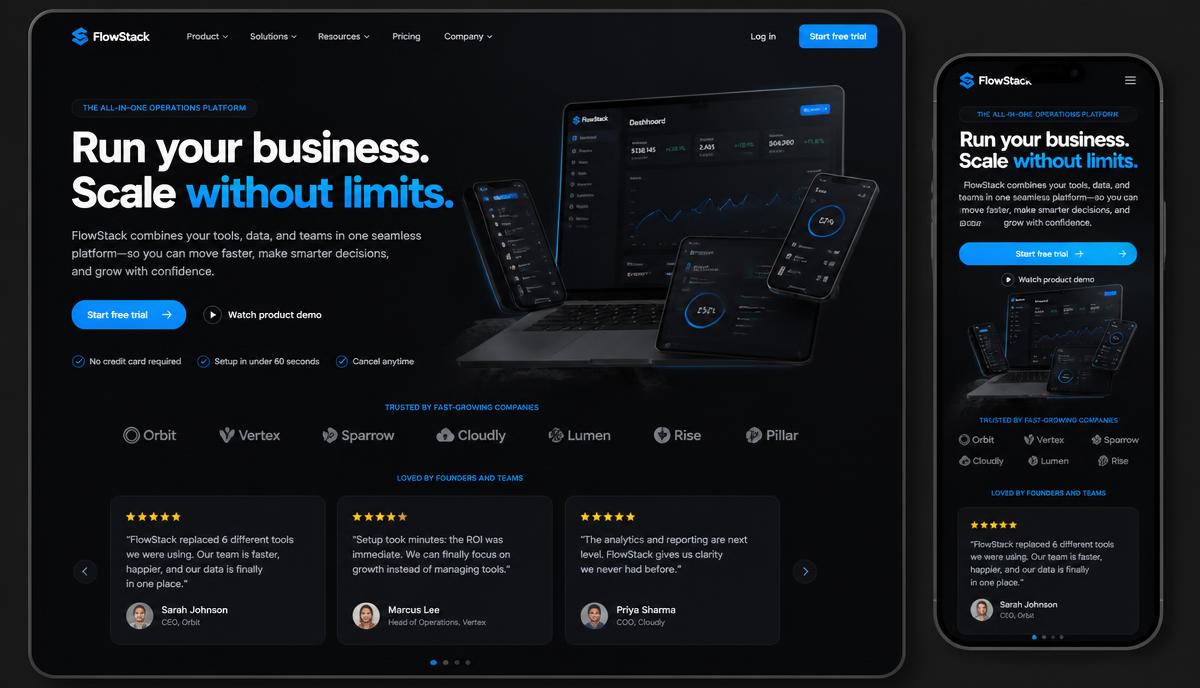
Conversion Optimization
How to Create a Homepage That Converts
A homepage that converts follows a sequence: attention, understanding, interest, trust, action. Here's how to build it.
9 min read ·
Read Article →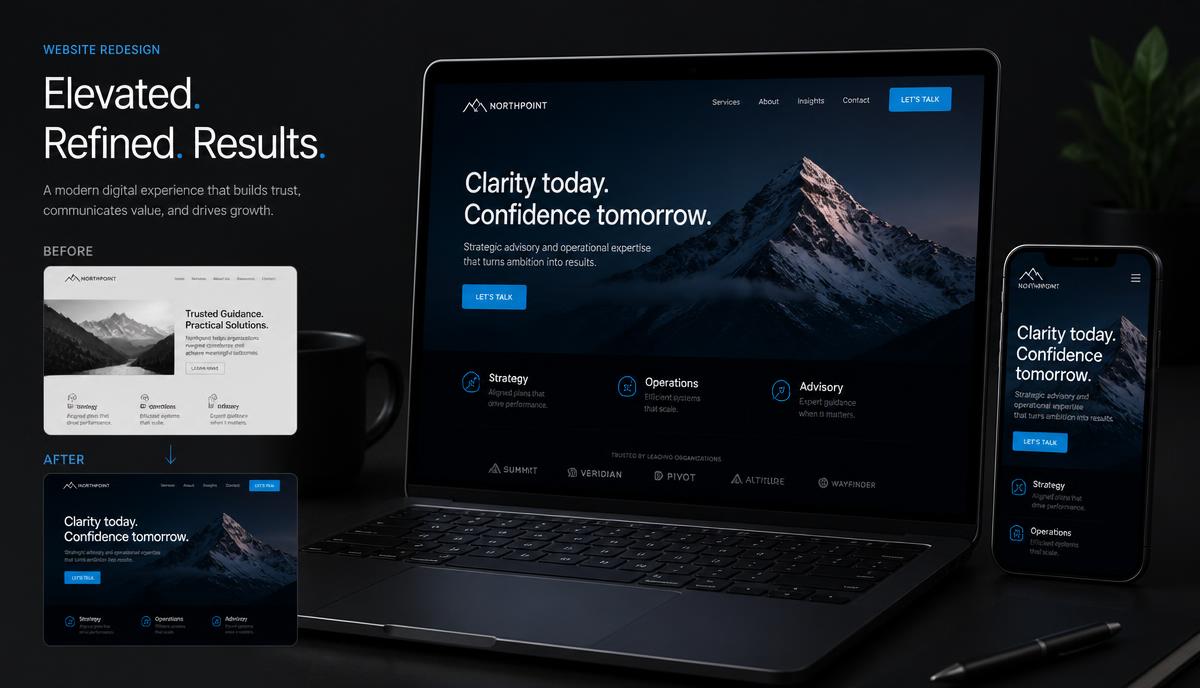
Website & Web Design
5 Signs Your Website Needs a Redesign
A redesign shouldn't just make your website prettier. It should make it work better. Here are the five signals worth acting on.
8 min read ·
Read Article →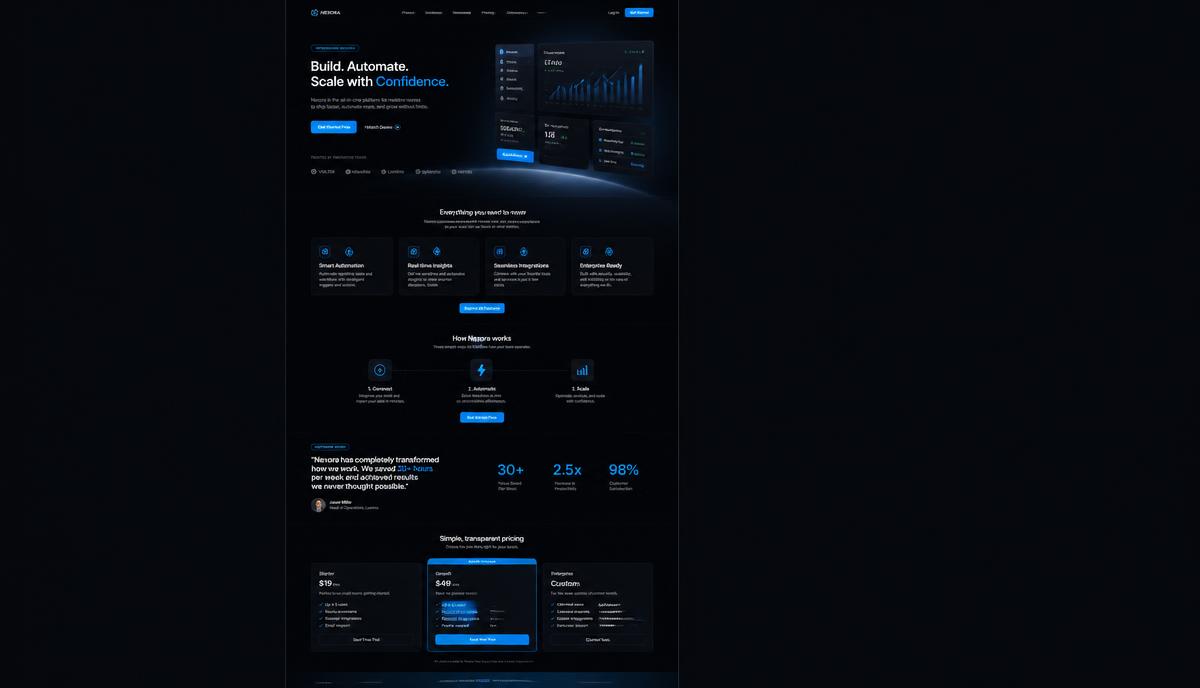
Conversion Optimization
Where Should Your CTA Buttons Go?
Above the fold isn't a rule. CTA placement should follow the moment your visitor becomes convinced.
6 min read ·
Read Article →Want this applied to your business?
Start with a strategy call, or run a free Insight Audit™ and bring the findings with you.